Diving in Loch Leven
I don’t think I’ve driven a road that encapsulates Scotland’s beauty and diverse landscape more than the A82 from Glasgow to Inverness. This incredible road runs along the side of the picture-perfect Loch Lomond, across the rugged landscape of Rannoch Moor, cuts through the breathtaking Glencoe, opening out onto the sights of Loch Leven before continuing to Fort William, up the banks of the mysterious and magical Loch Ness before finally reaching Inverness. It’s a road that’s travelled by thousands of tourists every year and all along it you’ll see cars pulled up and people with cameras and phones out looking for that insta-perfect photo.
But, what so few people realise is, as well as showing off Scotland’s landscape, the A82 also has some stunning diving just off it as well! Ok, this is where things get a little confusing, so let me clear this up just now. Scotland has two Loch Leven’s; one is in Kinross and is landlocked whereas the other is about “halfway” up the A82 at Ballachulish and is a sea loch, and it’s this one I’ll be talking about.
Along the banks of Loch Leven there are several dive sites which show off the incredible beauty of Scotland’s underwater world and are more than a match for the rugged magical “surface” landscapes that surround the loch. Now I’ve personally only dived three of the sites, and sadly one is inaccessible anymore due to development work, but the other two sites, along with the one called Manse Point I haven’t personally dived (though am reliably informed), still make the trip well worth it.
Carnoch Bay is, as the name suggests, a bay which literally offers something for everyone; from trainees taking their first breaths to those experienced divers looking for a bit of depth. With a maximum depth within the bay of only around 11m (a good bit of it is less) it offers instructors and trainees a “safe” environment to carry out skills as well as an excellent dive without needing to go to deep. It’s a sandy bottom so you just need to be careful of kicking up the vis.
For those looking for a bit more depth, finning out of the bay, or even entering at the top of the bay (a bit of a walk with kit), the seabed drops to +30m. And, on top of that, with a big carpark next to the entry point and the hotel literally a 2mins walk away it makes for an excellent site for a club weekend or day out.
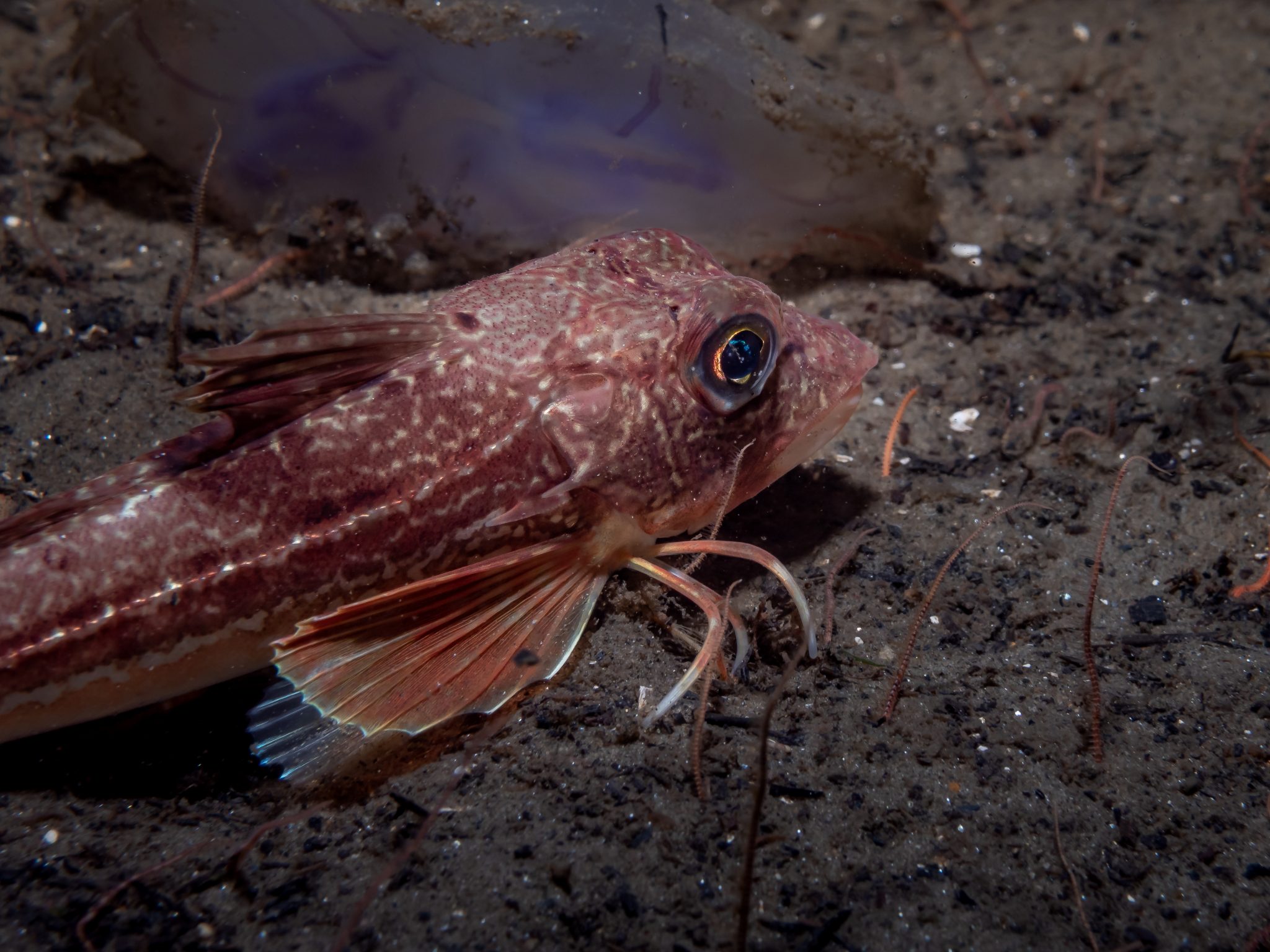
Personally, I’ve always headed out from the bay. Entering from the stoney beach you drop down to around 7 or 8m and to be honest, from here the dive is relatively simple. Keep the wall on your right-hand side and swim out as far as you like and, on the way back, keep it on your left. If you’re looking for depth the directions don’t change, keep swimming with the wall on your right and eventually it starts to drop.
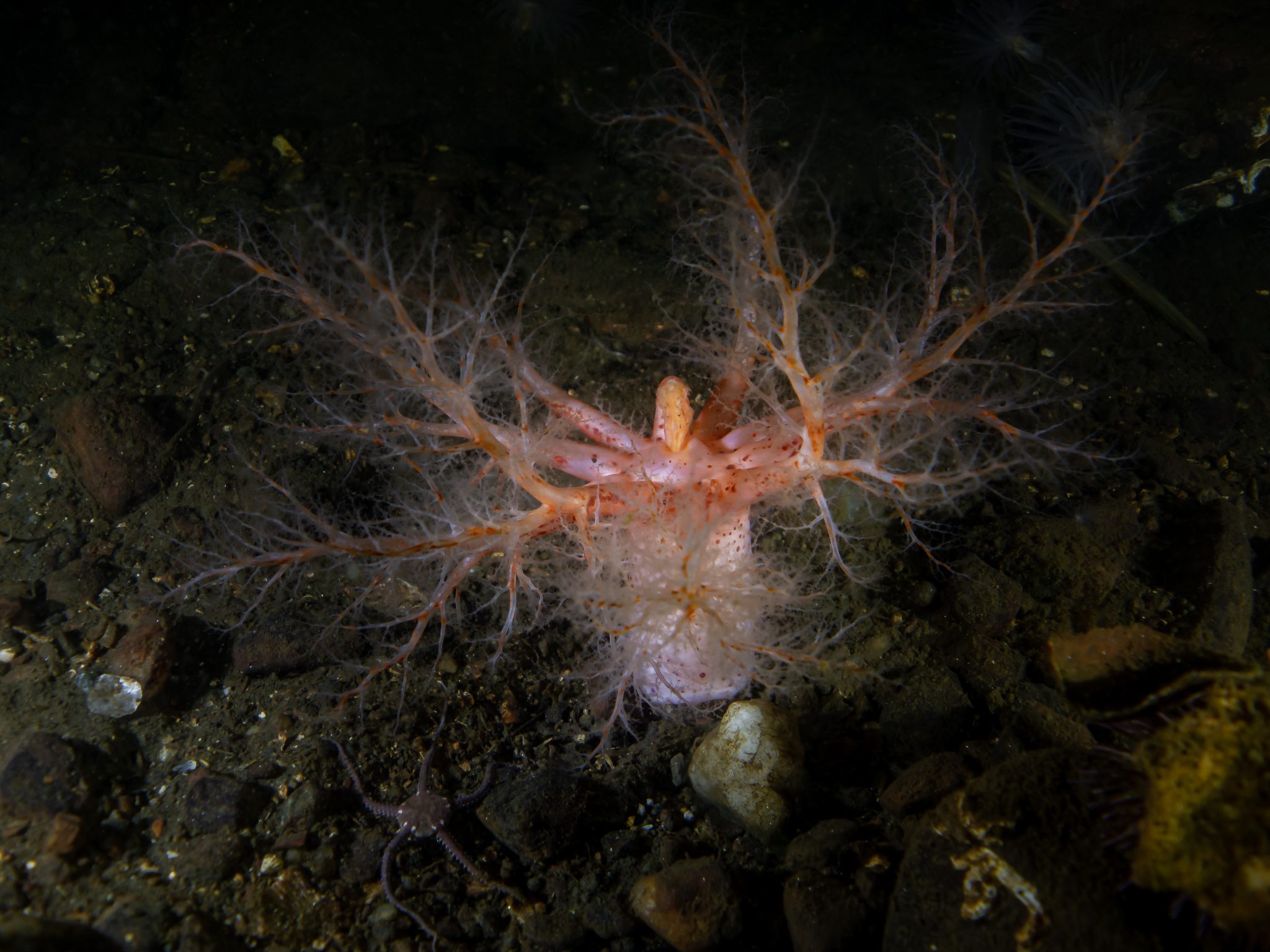
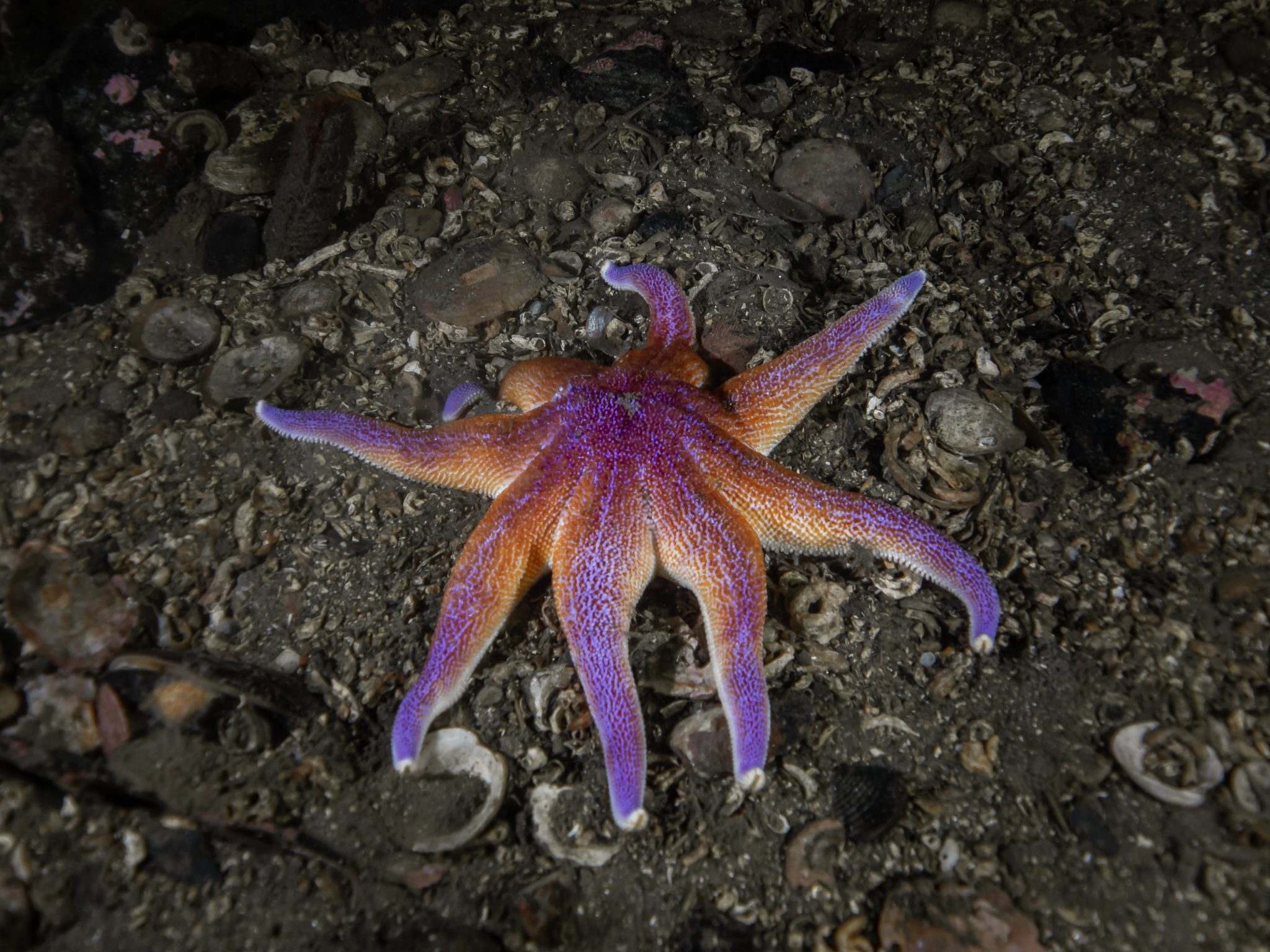
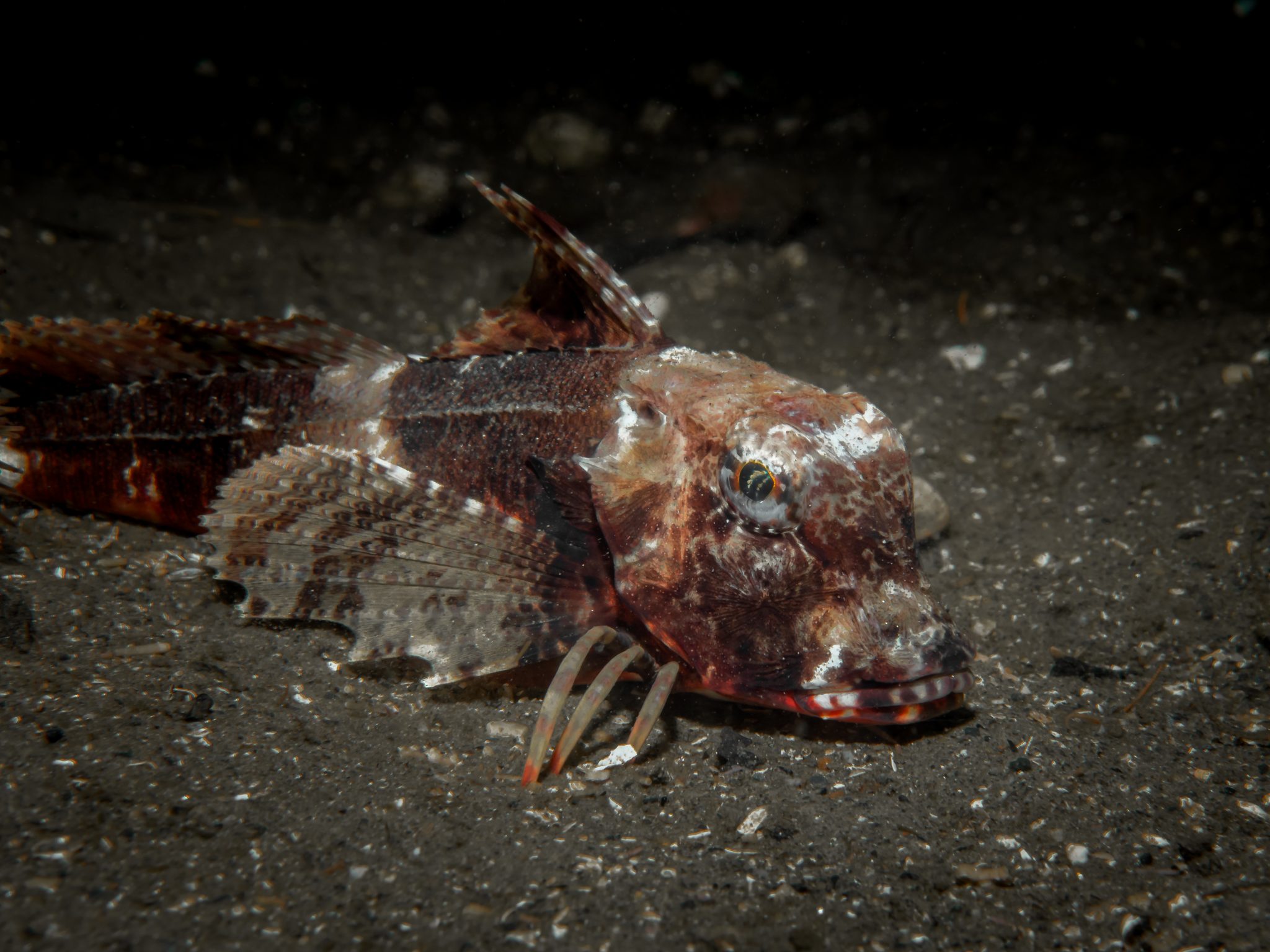
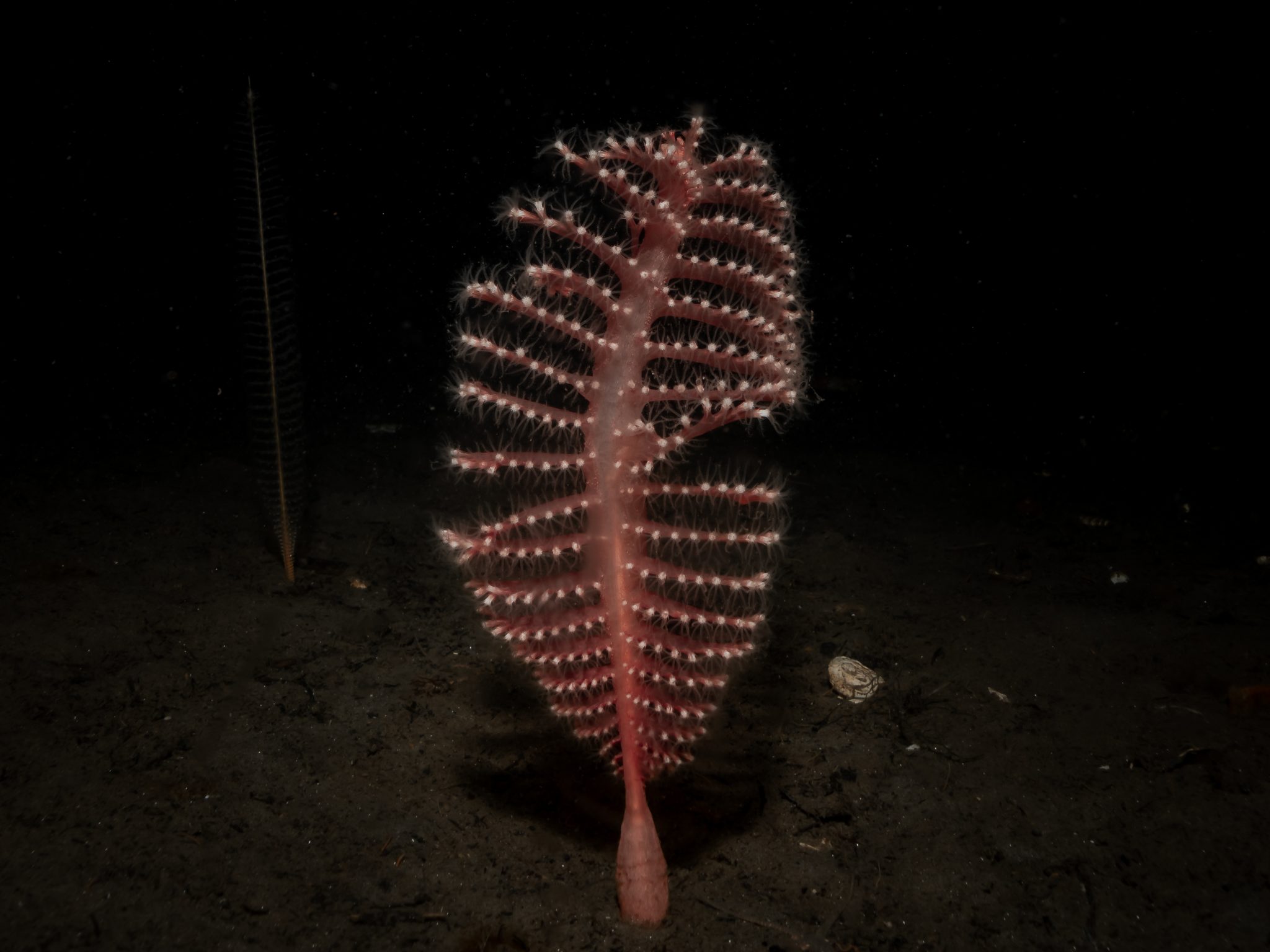
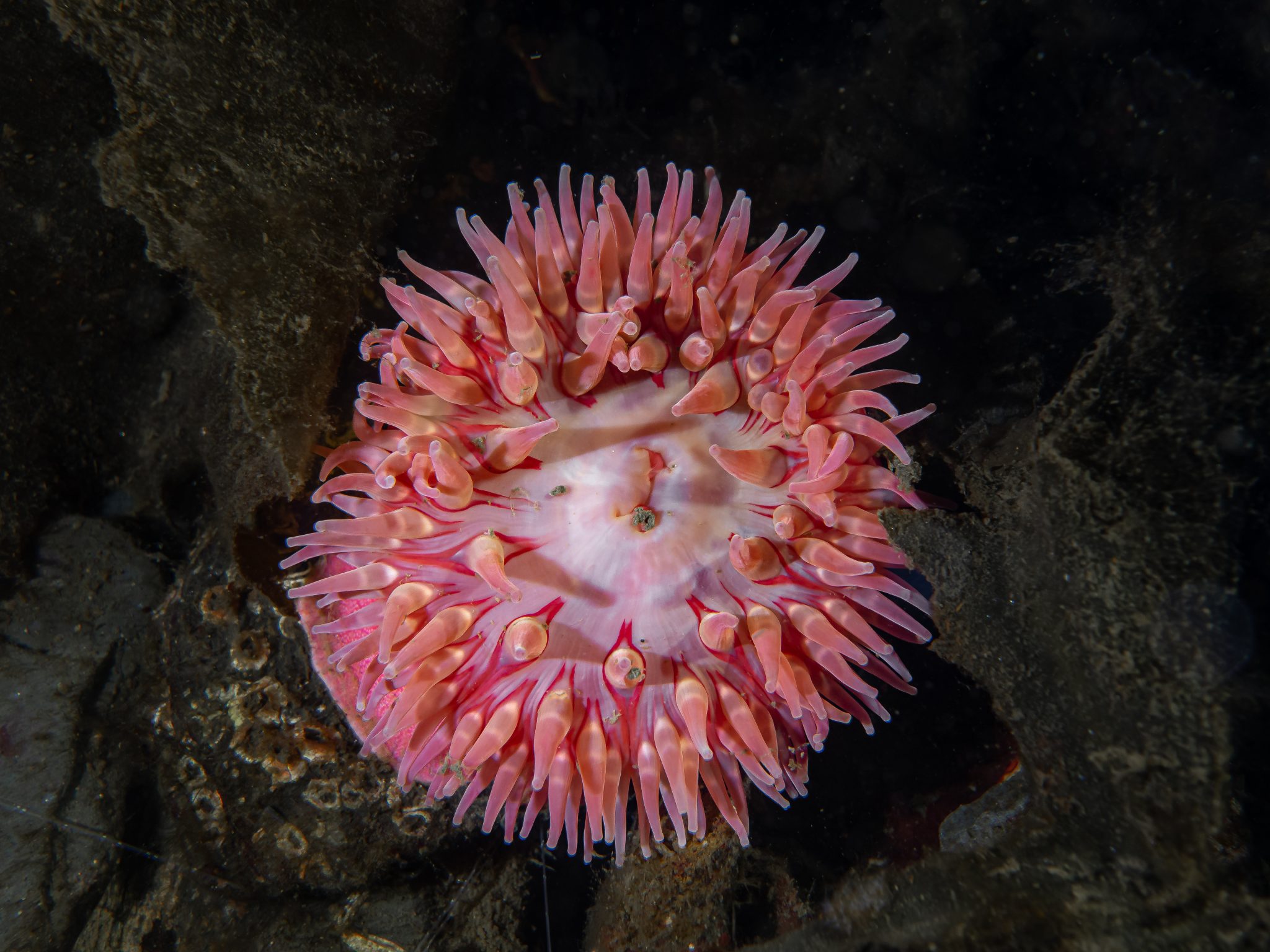
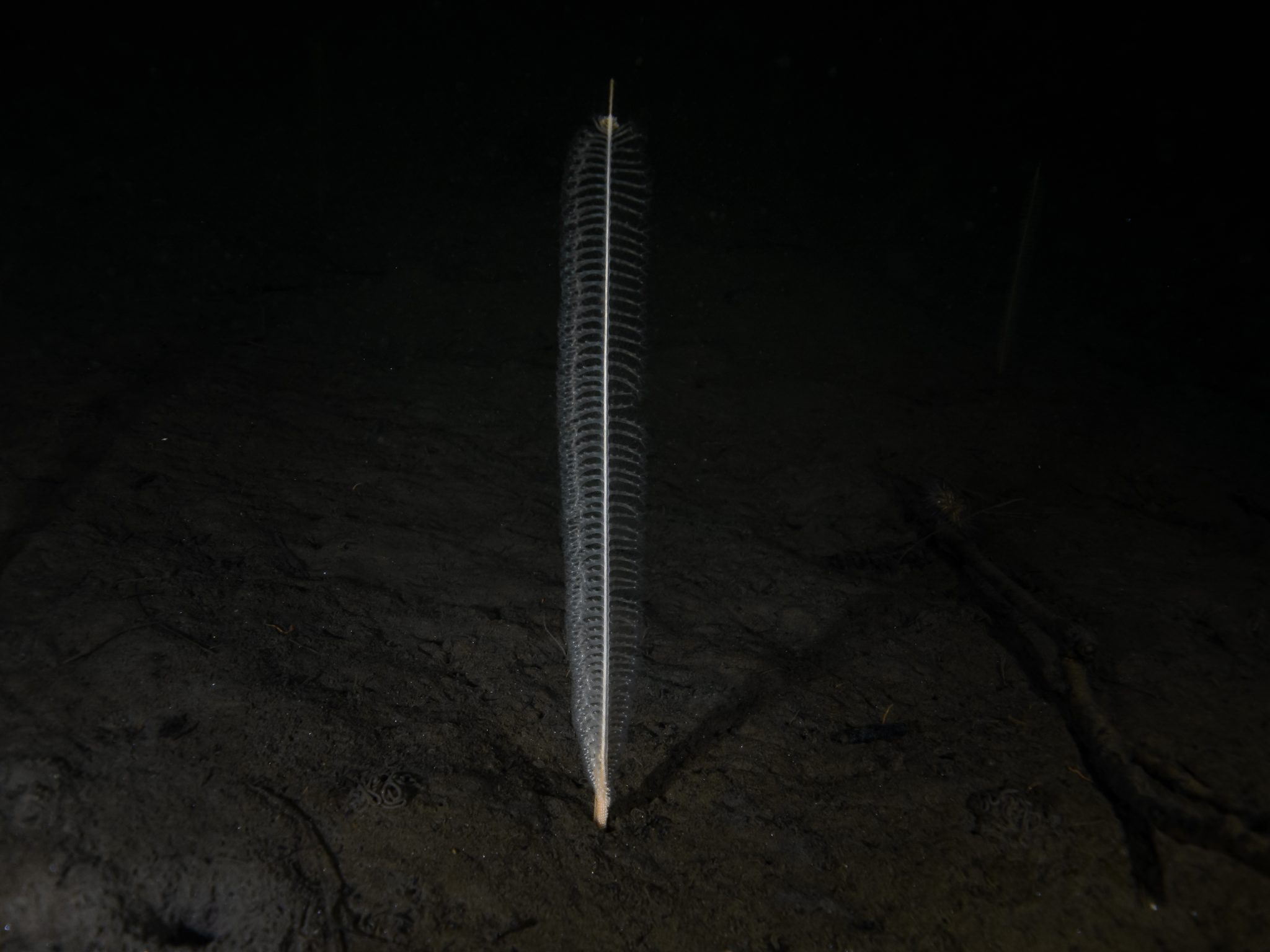
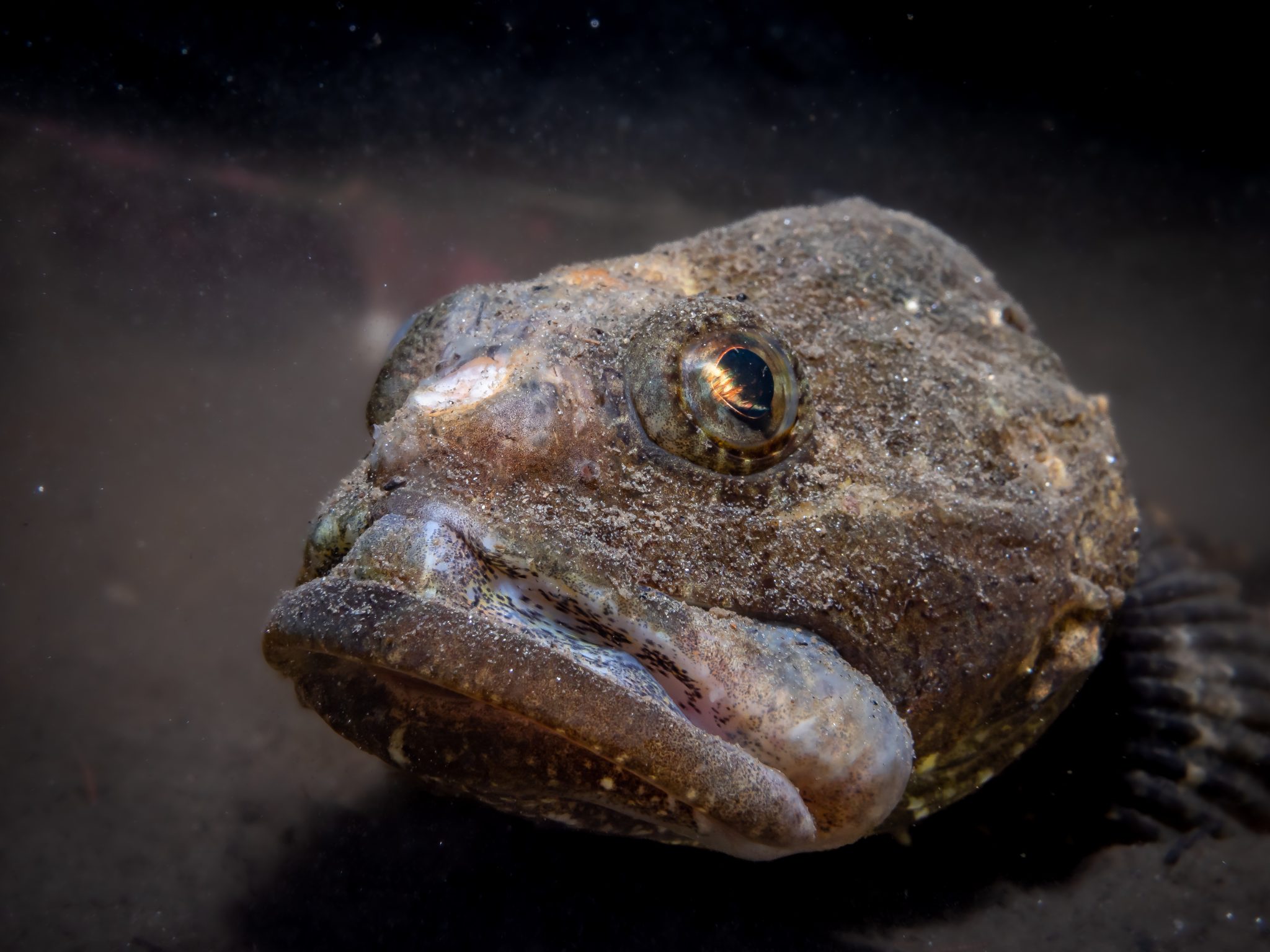
The wall is awash with life in the cracks and on the boulders; from starfish to sea cucumbers, but it’s when you come off it slightly this site really throws up some spectacular sights. The sandy bottom is littered with phosphorescent and slender sea pens which are magical. Don’t go to quickly across the seabed, take your time and look closely as often there’s the odd sea scorpion hiding away as well as gurnards and if you’re really luck an octopus tucked away under a rock.
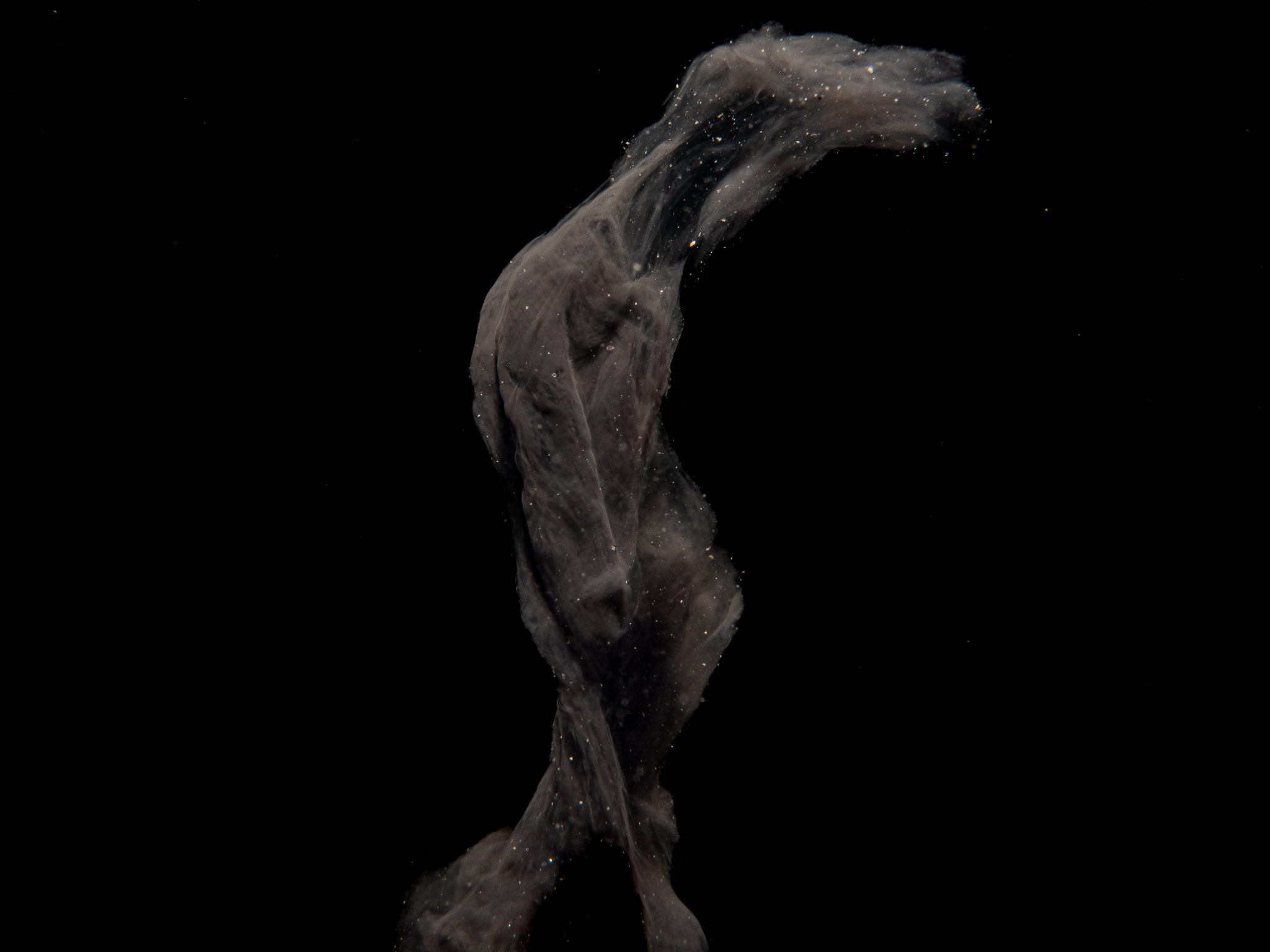
Sadly, I didn’t manage to get a shot of the octopus, but apparently, I did give it a fright which led to some rather “arty” shots of its ink. I suppose it’s the next best thing, right? Another very special unexpected sighting we had last time, which funnily enough I also didn’t get a photo of was a seal! As we made our way to the end of the bay my torch picked out, what I thought was a bit of an odd-looking rock… I guess it was odd looking as it wasn’t a rock at all but the seal! In my excitement I might have forgotten I had a camera and missed the shot again! On a bright sunny day (we do get them occasionally in Scotland) the shallowness of the bay means that the light streaming in from above makes for a truly incredible dive, and no need for a torch.
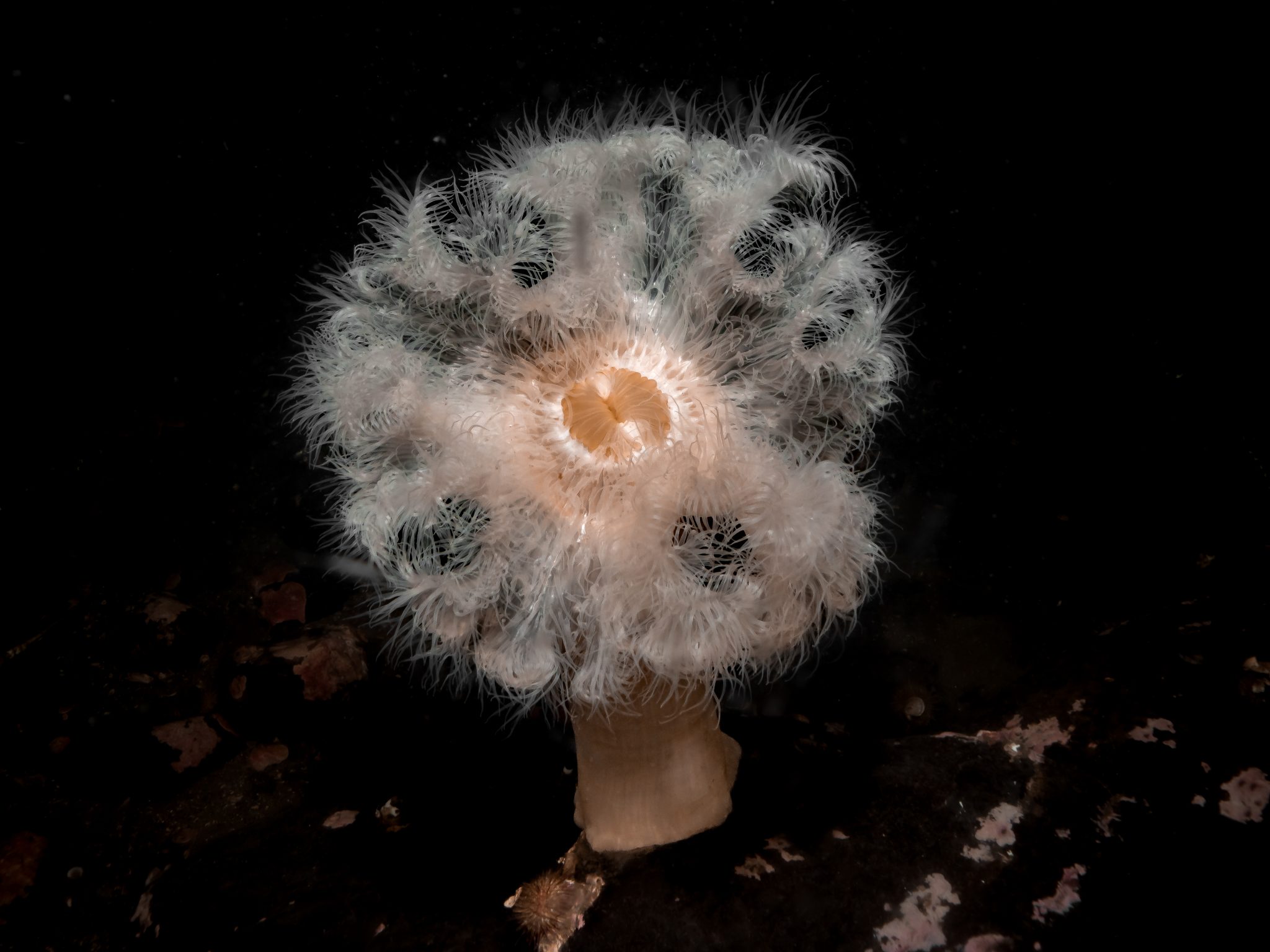
When you can combine a breathtaking journey through some of the most incredible scenery with a dive that’s equally as beautiful, well what more could you ask for?
For more from Ross, follow him on Instagram @underwater.ross and on Twitter @outdoorsross.